


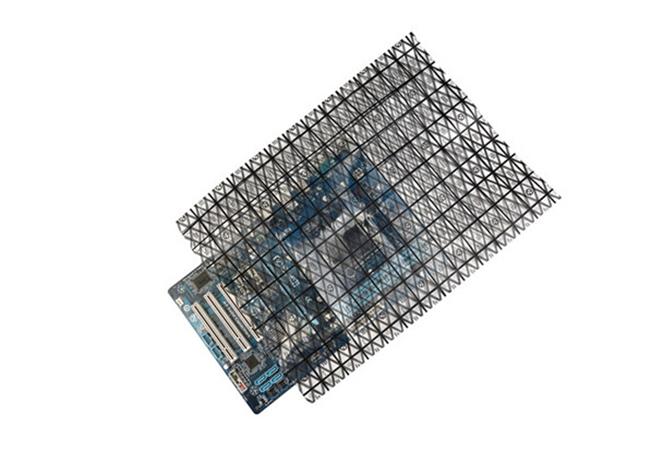


ESD Grid Bags
| Model: | ESD Grid Bags |
|---|---|
| Conventional thickness: | 0.04mm |
| Conventional resistance value: | surface resistivity 104–106Ω; inner surface resistance value 108Ω |
| Color: | translucent |
| Minimum width: | unlimited |
| Max. width: | 1400mm |
| Bag style: | coil, flat bag, self-sealing bag, organ bag, three-dimensional bag, shaped bag, etc. |
| Support printing: | 1-4 colors printing |
Introducing ESD Grid Bags
ESD Grid Bags are grid bags with anti-static features, usually made of multi-layer composite materials, with excellent anti-static properties and durability. It is used for storing and transporting electrostatic sensitive electronic components and parts. The anti-static properties of these bags can effectively prevent the generation and accumulation of static electricity, thus protecting electronic components from static damage. UV and humidity protection is also available to further protect electronic components.
ESD Grid Bags are an important tool to help protect electrostatic sensitive electronic components and parts and keep them intact. If you need to store or transport electrostatically sensitive electronic components, using ESD Grid Bags is a very smart choice.

ESD Grid Bags Application Areas

In the electronics manufacturing industry, ESD Grid Bags are used to store and transport electronic components such as integrated circuits, capacitors, resistors, semiconductor devices, etc. Since static electricity can damage these electronic components, the use of ESD Grid Bags can effectively prevent static interference and improve manufacturing quality and productivity.

In the medical device industry, ESD Grid Bags are used to store and transport electrostatic sensitive medical devices and appliances, such as surgical instruments, pacemakers, blood pressure monitors, etc.. These devices and appliances often require high precision and reliability, so using ESD Grid Bags reduces the risk of damage and failure.

In the automotive manufacturing industry, ESD Grid Bags are used to store and transport electrostatic sensitive automotive electronic components, electronic control units, and more. The use of ESD Grid Bags prevents electrostatic interference and ensures the proper functioning of the components.
Why Choose ESD Grid Bags?
Choose ESD Grid Bags to help protect static-sensitive electronic components and parts, improve product quality and reliability, meet international standards, come in a variety of sizes and dimensions, and are also environmentally friendly and recyclable.




Frequently Asked Questions
The following are some frequently asked questions about ESD Grid Bags and their answers:
Choosing the right ESD Grid Bags requires consideration of several factors, such as bag size, thickness, ESD protection level, color and quantity. It is recommended to choose bags that match the size of the electronic components to be stored or transported to ensure the best ESD protection. In addition, ESD Grid Bags that meet international standards should be selected to ensure that they meet the relevant quality standards.
If ESD Grid Bags are broken or damaged, it is recommended that the bags be replaced immediately to avoid electrostatic interference with electronic components. If the electronic components inside the bag have been exposed to electrostatic interference, they should be properly inspected and tested to ensure their performance and reliability.
ESD Grid Bags can usually be reused, but the number of uses and life span depends on the material and conditions of use of the bag. It is recommended that the appearance and performance of the bags be inspected before each use to ensure they are not broken or damaged. If the bag is broken or damaged, the bag should be replaced immediately to ensure ESD protection.
ESD Grid Bags should be stored in a dry, clean, dust-free environment to ensure their best anti-static protection. During storage and use, direct contact with the ground and other objects that may cause static electricity interference should be avoided. In addition, care should be taken to avoid breakage and damage to the bags to ensure their optimal performance and longevity.